The Missing Step: Why You Need Third-Party Verification After Mold or Water Remediation in Vail
May 16, 2026 3:29 pm Leave your thoughtsYou hired a remediation company, watched them work for days, and finally received the all-clear. The equipment is gone, the area looks clean, and you are ready to move on. But before you close the door on that chapter, there is one critical step that far too many property owners in Vail, CO skip entirely: third-party verification.
Post-remediation testing is not a formality. It is the only way to know with certainty that the remediation was successful and that your indoor environment is truly safe. Without it, you are essentially taking the word of the same company that was paid to do the cleanup, and that creates a clear conflict of interest.
What Is Third-Party Verification and Why Does It Matter?
Third-party verification refers to post-remediation testing conducted by an independent inspector or environmental testing company that has no financial relationship with the remediation contractor. In the mountain communities of Vail, CO, Eagle, CO, and Avon, CO, where older homes, seasonal moisture, and snowmelt create persistent conditions for mold growth, this step is especially important.
When a remediation company finishes its work, it may conduct its own clearance testing. While some companies do this honestly and thoroughly, the inherent problem is objectivity. A company that profits from the remediation project is not in the best position to declare whether that project succeeded or failed. If the work was incomplete, they face the prospect of returning to do more labor at no additional charge. Third-party verification removes that conflict entirely.
An independent inspector will evaluate the treated area using the same scientific methods as any qualified environmental professional. They are looking for residual mold spore counts, moisture levels, and visible signs of incomplete remediation. Because they have nothing to gain from a favorable result, their findings are far more credible and far more useful to you as a property owner.
The Risk of Skipping Post-Remediation Testing in Mountain Communities
Vail, CO sits in a high-alpine environment where moisture management is a year-round challenge. Properties in this region face snow accumulation, rapid temperature changes, and seasonal freeze-thaw cycles that can drive water into wall assemblies, crawl spaces, and attic areas. Mold testing after remediation is not just a box to check; it is a safeguard against recurring problems that can quietly worsen over time.
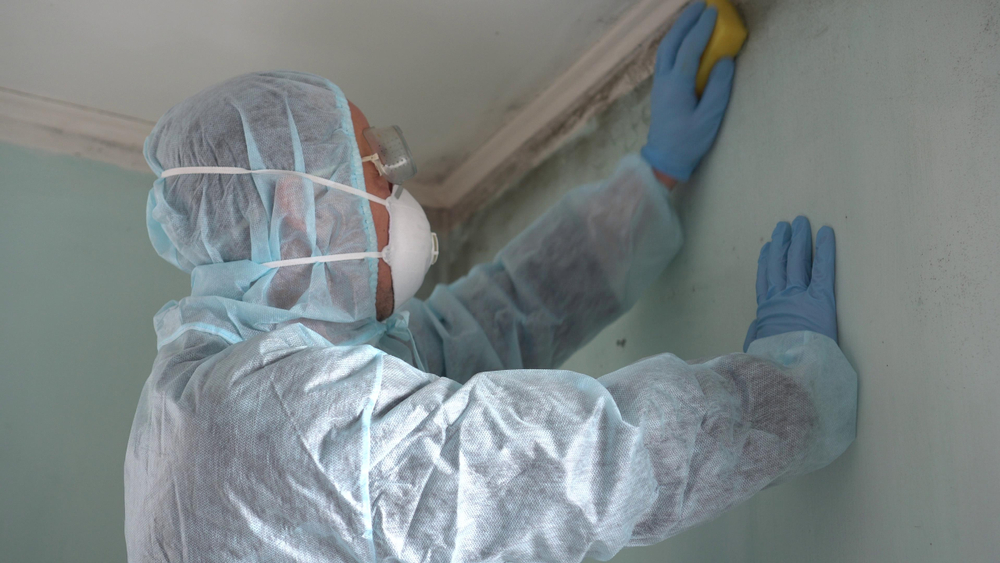
If remediation was incomplete, mold colonies can re-establish within days under the right conditions. A property that appears clean to the naked eye may still harbor elevated spore counts behind drywall, inside HVAC systems, or beneath flooring. Without post-remediation testing, these hidden problems go undetected until they become severe enough to cause visible damage or health symptoms.
The cost of skipping this step can be significant. Returning mold growth often requires a second round of remediation, which is more expensive than the first because the affected area has typically expanded. Property owners in Eagle, CO and Avon, CO who invest in independent post-remediation testing upfront consistently save money over the long term by catching incomplete work early.
There is also the matter of health. Mold exposure is linked to a wide range of respiratory symptoms, allergic reactions, and in some cases more serious conditions for individuals with compromised immune systems. Families returning to a home after remediation deserve to do so with confidence, and that confidence only comes from verified clearance testing conducted by a neutral party.
Asbestos Testing: An Overlooked Component of Older Property Remediation
In the mountain resort communities along the I-70 corridor, including Vail, CO, Eagle, CO, and Avon, CO, a significant portion of the housing stock was built during the 1960s, 1970s, and 1980s. Properties from this era frequently contain asbestos in floor tiles, insulation, textured ceiling coatings, pipe wrapping, and joint compound. When water damage occurs in these buildings, the remediation process itself can disturb asbestos-containing materials if proper precautions are not taken.
Asbestos testing before and after any remediation project in an older property is an essential safety measure. If a remediation crew unknowingly disturbs asbestos during demolition or dryout work, microscopic fibers can become airborne and contaminate surfaces throughout the structure. Unlike mold spores, which are naturally occurring and can be addressed through cleaning and moisture control, asbestos fibers do not degrade and present long-term health risks with no safe level of exposure according to federal guidelines.
Third-party verification in older properties should therefore include asbestos testing as part of a comprehensive clearance evaluation. An independent environmental professional can collect samples from suspect materials, evaluate whether any disturbance occurred during remediation, and confirm that the post-remediation environment meets safety standards. This is not an optional add-on in historic or older construction; it is a fundamental part of protecting the people who will occupy the space.
Choosing the Right Independent Inspector for Post-Remediation Testing
Not all environmental testing companies operate at the same level of quality. When selecting an independent inspector for post-remediation testing in Vail, CO or the surrounding communities of Eagle, CO and Avon, CO, there are several factors worth evaluating.
Look for an inspector who holds current credentials from a recognized certifying body, such as the American Industrial Hygiene Association or the Indoor Air Quality Association. These credentials indicate that the professional has met established standards for environmental testing and interpretation of results. Avoid companies that offer both remediation services and post-remediation clearance testing for the same project, as this undermines the independence that makes third-party verification meaningful in the first place.
Ask whether the company uses accredited laboratories to analyze air and surface samples. The quality of laboratory analysis directly affects the reliability of your results. A certified lab operating under established quality control protocols will produce findings that are defensible, whether you are presenting them to an insurance company, a future buyer, or simply using them to make informed decisions about your property.
It is also worth asking about the scope of the inspection. A thorough post-remediation evaluation should include air sampling from the treated area and at least one control sample from an unaffected area of the building for comparison. It should include surface sampling in cases where visible residue is present, moisture readings to confirm that the underlying conditions for mold growth have been resolved, and a written report summarizing findings and clearance status.
In mountain communities where property values are high and environmental conditions are demanding, working with a qualified independent inspector is not an extra expense; it is a sound investment in the long-term integrity of your property.
Conclusion
Post-remediation testing through third-party verification is the missing step that too many property owners overlook after mold or water damage. In Vail, CO, Eagle, CO, and Avon, CO, where moisture challenges are constant and older properties introduce additional concerns like asbestos testing, independent clearance evaluation is essential. It protects your health, protects your investment, and gives you the objective confirmation that the remediation company’s work was genuinely successful. Before you consider any remediation project complete, make sure a qualified, independent professional has signed off on the results.
Need Biohazard Consulting Near You?
Welcome to HealthSafe Inspections, Inc.! We are a locally owned and operated business that provides quality services to customers in Aspen and the surrounding cities. With over 35 years of experience in the industry, we strive to maintain the friendly and trustworthy reputation that we have built. HealthSafe Inspections, Inc. is an indoor environmental consulting firm. Our services include on-site investigation and sampling, report writing, recommendations, and post-remediation verification. After an initial consultation, we are able to determine what is needed. We also consult and test for several indoor contaminants, such as allergens, asbestos, bacteria, mold and fungus, radon gas, and more. Contact us today to learn more about what we can do for you!
Categorised in: Post-Disaster Remediation
This post was written by admin